


THC and anxiety have a complicated relationship. THC, the primary psychoactive compound in cannabis, does not simply calm or worsen anxiety. Its effects follow a biphasic dose-response pattern: low to moderate doses can reduce anxiety, while high doses frequently increase it, triggering fear and paranoia. The endocannabinoid system, which regulates mood and stress responses, is the mechanism THC acts on. CBD presence in the same product significantly changes that outcome. Understanding this distinction is the starting point for anyone considering cannabis anxiety treatment.
What does current research say about THC and anxiety?
The science on THC for anxiety relief is real but complicated. A 2026 longitudinal study found that adults using flower cannabis products combining THC and CBD experienced a 39.5% anxiety reduction over 30 days. That is a meaningful result. By contrast, people using THC-dominant flower products alone saw only a 7.8% reduction. CBD-only products landed in the middle at 34.8%. The gap between 39.5% and 7.8% tells you almost everything you need to know about why cannabinoid ratios matter.
Systematic reviews paint a more cautious picture. Evidence quality is rated low to moderate across clinical trials and observational studies, with mixed results and some studies reporting anxiety worsening rather than relief. That does not mean THC is useless for anxiety. It means the effects are not universal, and the research is still catching up to real-world use patterns.
The biphasic principle is the most important concept to understand. Low-to-moderate THC doses can alleviate anxiety, while high doses often increase anxiety and paranoia, particularly in people who are already sensitive to stress. Think of it like alcohol: one drink relaxes most people, but four drinks in the same sitting often produces the opposite effect.
Inhalation vs. edibles: why the delivery method changes everything
Edibles have a delayed onset and slower absorption compared to inhaled flower, which produces a fundamentally different anxiety response pattern. With inhalation, effects arrive within minutes and peak quickly. With edibles, onset can take 60–120 minutes. People who do not feel an effect quickly often take more, then experience a sudden high-dose response that spikes anxiety rather than reducing it. Knowing this prevents one of the most common mistakes people make when using cannabis for anxiety.
Pro Tip: If you are new to using THC for anxiety, start with inhalation rather than edibles. The faster feedback loop lets you gauge your response and stop before overshooting the dose.
| Method | Onset time | Anxiety risk at high dose |
|---|---|---|
| Inhaled flower | 2–10 minutes | Moderate, easier to control |
| Edibles | 60–120 minutes | Higher, due to delayed feedback |
| Vape cartridge | 2–5 minutes | Moderate, controllable with pacing |
How does cannabinoid ratio affect anxiety outcomes?
CBD modulates THC’s effects at the CB1 and CB2 receptors in the endocannabinoid system. Specifically, CBD weakens THC’s receptor activation and reduces its anxiety-inducing properties. This is not a minor tweak. It is the difference between a product that reliably calms and one that occasionally panics.
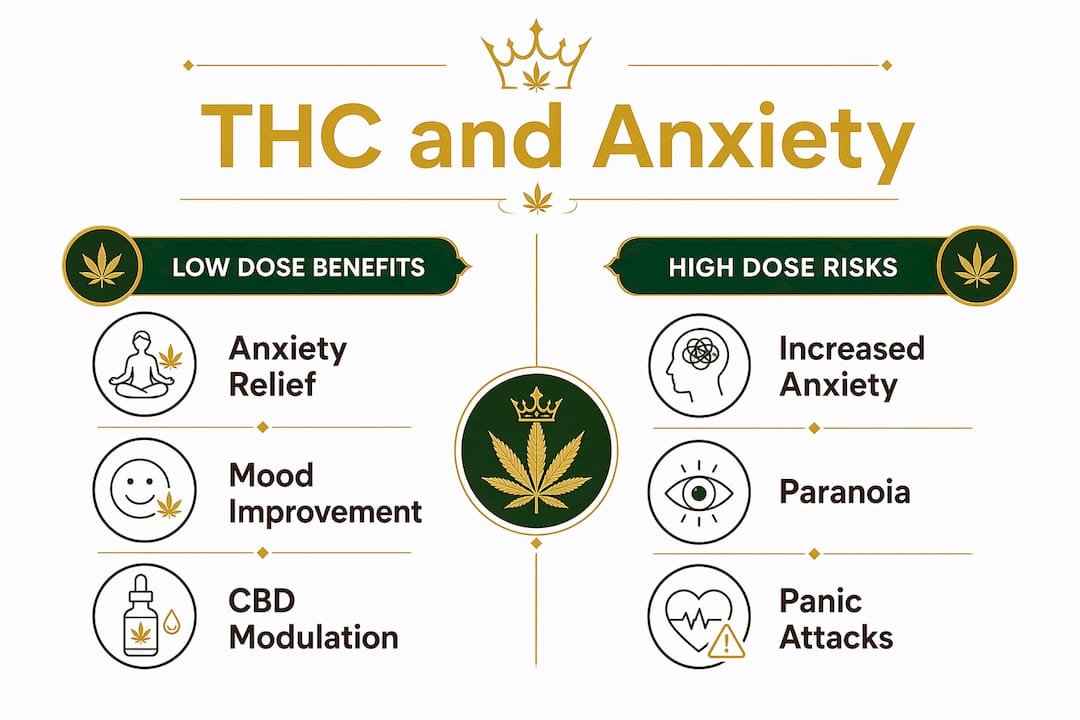
THC-dominant products carry a higher risk of anxiety and paranoia at elevated doses. CBD-inclusive products provide more consistent anxiety relief compared to THC-dominant options, which can produce minimal or inconsistent benefit. For people using cannabis specifically to manage anxiety, a balanced or CBD-leaning ratio is the safer starting point.
Here is what to look for when choosing a product for anxiety management:
- Balanced ratios (1:1 THC:CBD): These products give you the psychoactive effect of THC while CBD blunts the anxiogenic edge. Good for people who want noticeable effects without high paranoia risk.
- CBD-dominant with low THC: Produces minimal psychoactivity. Best for people who are highly sensitive to THC or new to cannabis.
- THC-dominant (high THC, low CBD): Higher anxiety risk at elevated doses. If you use these, keep doses very low and increase slowly.
- Full-spectrum products: Contain multiple cannabinoids and terpenes that may work together to moderate THC’s effects. Often preferred over isolates for anxiety use.
Pro Tip: Check the lab report before buying. A product labeled “balanced” should show roughly equal THC and CBD percentages. If the CBD content is not listed, treat it as a THC-dominant product and dose accordingly.
Understanding why lab-tested THC carts matter becomes obvious once you realize how much the actual cannabinoid content affects your anxiety response. Unlabeled or untested products make it impossible to dose responsibly.
What personal factors shape how THC affects your anxiety?
The same cannabis product can cause calm in one person and panic in another based on dose and individual biology. This is not a flaw in the research. It is the defining feature of how THC interacts with human physiology.
Several factors determine which side of that divide you land on:
- Genetics and endocannabinoid system baseline: Some people have naturally lower endocannabinoid tone, making them more sensitive to THC’s psychoactive effects. Others have higher tolerance from the start.
- Prior cannabis experience: First-time or infrequent users are significantly more likely to experience anxiety and paranoia at doses that regular users handle without issue.
- Mental health history: People with pre-existing anxiety disorders, PTSD, or a family history of psychosis face higher risk of adverse reactions, particularly at high THC doses.
- Age: Younger users, particularly those under 25, show greater sensitivity to THC’s anxiety-inducing effects due to ongoing brain development.
- Expectancy and mindset: Placebo and expectancy effects strongly influence perceived anxiety relief. If you expect THC to calm you, you are more likely to report feeling calm, even when the pharmacological effect is mild. The reverse is also true: anxiety about using cannabis can amplify a negative response.
One physical effect catches many people off guard. THC increases heart rate, a reaction that can trigger panic in people who are already anxious. The elevated heart rate is not dangerous for most healthy adults, but it can feel alarming. That physical sensation then feeds back into the anxiety response, creating a cycle that feels like the cannabis is making things worse. Knowing this in advance breaks the cycle before it starts.
Frequency of use also matters. Regular users develop tolerance to THC’s psychoactive effects, which reduces both the calming and the anxiety-inducing responses over time. This means the dose that relieves anxiety for a daily user may be far higher than what a new user should attempt.
How to use THC for anxiety safely
Safe use of THC for anxiety management comes down to five principles. None of them are complicated, but skipping any one of them significantly increases the risk of a bad experience.
- Start low, go slow. Begin with the smallest effective dose and wait for the full effect before considering more. For inhalation, that means one or two puffs and a 15-minute wait. For edibles, it means a single low-dose piece and a two-hour wait.
- Prioritize balanced or CBD-inclusive products. The research is clear that CBD-inclusive flower products outperform THC-dominant options for anxiety reduction. Choose products with a meaningful CBD content, not just a trace amount.
- Match the consumption method to your experience level. New users should use inhalation methods for faster feedback. Edibles are better suited to experienced users who know their dose response.
- Know your drug interactions. Cannabis interacts with several medications, including blood thinners, antidepressants, and sedatives. If you take prescription medication for anxiety or any other condition, speak with a healthcare professional before adding THC.
- Recognize the signs of an adverse response. Rapid heart rate, racing thoughts, paranoia, and a sense of dread are signals to stop. Move to a calm environment, stay hydrated, and remember that the effects are temporary. CBD, black pepper, or simply lying down can help reduce the intensity.
Consulting a healthcare professional is not just a legal disclaimer. For people with diagnosed anxiety disorders, a GP or psychiatrist can help you understand whether THC is likely to help or harm based on your specific history. The GAD-7 anxiety screening tool is commonly used in UK primary care to assess anxiety severity, and it provides a useful baseline for tracking whether any intervention, including cannabis, is actually working.
Key takeaways
THC’s effect on anxiety is dose-dependent and shaped by cannabinoid ratios, meaning CBD-inclusive products at low doses offer the most consistent relief.
| Point | Details |
|---|---|
| Biphasic dose response | Low THC doses may reduce anxiety; high doses often increase paranoia and fear. |
| CBD ratio is critical | THC+CBD products produced a 39.5% anxiety reduction vs. 7.8% for THC-dominant products. |
| Delivery method matters | Inhalation gives faster feedback; edibles carry higher overdose risk due to delayed onset. |
| Individual factors vary | Genetics, mental health history, and prior cannabis experience all shape your response. |
| Physical effects can mislead | THC-induced heart rate increase can trigger panic; knowing this in advance prevents a feedback loop. |
What I’ve learned from watching people use THC for anxiety
The most common mistake I see is people treating THC like a prescription. They read that cannabis reduces anxiety, buy the strongest product available, and then wonder why they feel worse. High-THC, low-CBD products are not designed for anxiety management. They are designed for recreational intensity. Using them for anxiety is like taking a double espresso to treat insomnia.
The second mistake is ignoring the ratio entirely. People focus on THC percentage as a quality signal, but for anxiety use, a product with 15% THC and meaningful CBD content will almost always outperform a 30% THC isolate. The research backs this up clearly, and so does practical experience.
What actually works is personalized, low-dose experimentation with CBD-inclusive products. That sounds less exciting than a high-potency vape, but it produces consistent results. The people who report genuine, sustained anxiety relief from cannabis are almost always the ones who started slow, paid attention to how their body responded, and adjusted from there.
The conversation around cannabis and anxiety in the UK is still catching up to the evidence. Stigma pushes people toward secrecy, which means they often dose without guidance and without tracking results. Using a simple tool like the GAD-7 before and after a trial period gives you actual data instead of a vague sense of whether things feel better. That kind of self-awareness is what separates informed use from guesswork.
— Jsuis
Thcvapesuk’s range for mindful THC use
Choosing the right product for anxiety starts with knowing what is in it. Thcvapesuk carries a curated selection of lab-tested vape products with clear cannabinoid profiles, so you are never guessing about the THC:CBD ratio before you inhale.
The range includes balanced and CBD-inclusive options alongside THC-dominant products, covering the full spectrum of user needs. Whether you are exploring a disposable vape for the first time or looking for a consistent daily option, every product ships discreetly across the UK with full lab documentation. For people using THC specifically to manage anxiety, that transparency is not optional. It is the foundation of safe, informed use.
FAQ
What is the safest THC dose for anxiety?
The safest starting dose for anxiety is the lowest available amount, typically one to two inhalations or a single low-dose edible. Increase only after waiting for the full effect and confirming the response is positive.
Can THC make anxiety worse?
Yes. High THC doses frequently increase anxiety and paranoia, particularly in sensitive users or those with pre-existing anxiety disorders. The biphasic dose-response means the same compound that calms at low doses can alarm at high doses.
Is CBD or THC better for anxiety?
CBD-inclusive products outperform THC-dominant products for anxiety relief. Adults using THC+CBD flower saw a 39.5% anxiety reduction compared to 7.8% for THC-dominant products, making the combination significantly more effective.
Does THC cause panic attacks?
THC can trigger panic in susceptible individuals, particularly through its effect on heart rate. THC-induced tachycardia can feel alarming and feed into a panic response. This is more common at high doses and in people with no prior cannabis experience.
Should I talk to a doctor before using THC for anxiety?
Yes, particularly if you take prescription medication or have a diagnosed anxiety disorder. Cannabis interacts with several common medications, and a healthcare professional can help you assess whether THC is appropriate for your specific situation.
