


A cannabis terpene profile is the specific combination of aromatic compounds that determines the flavor, aroma, and effect of any strain or vape product. These compounds, called terpenes, work alongside cannabinoids like THC to shape your entire experience. Understanding terpene profiles explained in full means you stop chasing THC percentages and start choosing products that actually match what you want to feel. For UK vapers, this knowledge separates a forgettable session from one that delivers exactly the right mood, body sensation, and flavor.
What are terpene profiles and why do they matter?
A terpene profile is a map of the aromatic compounds present in a cannabis product, listed by type and concentration. Terpenes are organic molecules produced by plants, and cannabis produces over 100 of them. Each one carries a distinct aroma and interacts with your body in a specific way.
The critical insight is this: terpenes act as the steering wheel for your cannabis experience. THC determines the intensity of the high, but terpenes dictate its character and direction. That means two products with identical THC levels can feel completely different based on their terpene composition.

Terpene profiles also appear on Certificates of Analysis (COAs), which are lab reports issued by third-party testing facilities. Gas Chromatography-Mass Spectrometry, known as GC-MS lab testing, is the gold standard method for accurate terpene quantification. When you see a COA with a named methodology and detection limits, you can trust the numbers.
The six most common cannabis terpenes and their effects
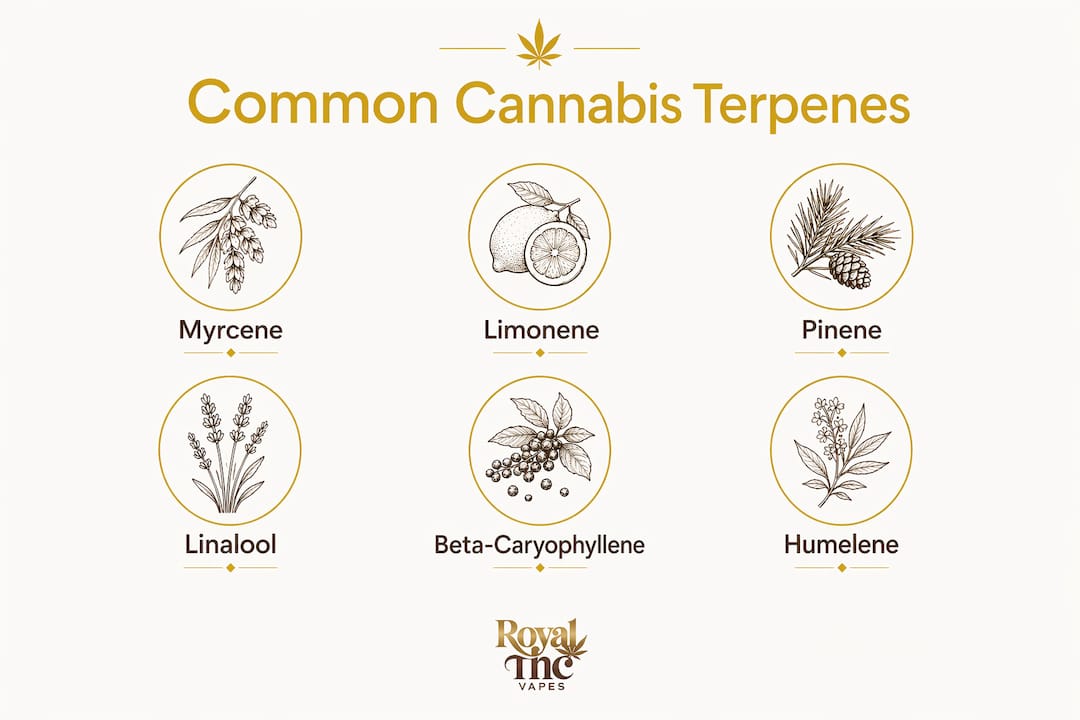
Knowing the major players makes reading any terpene profile straightforward. The table below covers the six most common terpenes, their aromas, natural sources outside cannabis, and their general effects.
| Terpene | Aroma | Found In | General Effect |
|---|---|---|---|
| Myrcene | Earthy, musky, herbal | Mango, hops, thyme | Relaxing, sedating at higher levels |
| Limonene | Citrus, lemon, orange | Citrus peel, juniper | Uplifting, mood-boosting |
| Beta-caryophyllene | Spicy, peppery, woody | Black pepper, cloves | Anti-inflammatory, calming |
| Linalool | Floral, lavender | Lavender, coriander | Anxiety-reducing, calming |
| Alpha-pinene | Pine, fresh, sharp | Pine trees, rosemary | Alert, focused, memory-supporting |
| Humulene | Earthy, hoppy, woody | Hops, ginseng, sage | Appetite-suppressing, grounding |
Myrcene deserves special attention because its concentration directly predicts sedation level. Myrcene above 0.5% tends to produce sedating effects, concentrations between 0.2% and 0.5% deliver a balanced feel, and anything below 0.2% lets other terpenes take the lead. This single data point can tell you whether a product will put you on the couch or keep you functional.
Beta-caryophyllene is the only terpene that binds directly to CB2 receptors, the same receptors involved in inflammation and anxiety regulation. That makes it uniquely active in the body, not just through aroma. Linalool works differently. It modulates GABA-A receptors through the olfactory system, which explains why lavender-scented products genuinely calm the nervous system rather than just smelling pleasant.
Pro Tip: If you want a vape that helps you wind down without full sedation, look for a profile where linalool and myrcene are both present but myrcene stays below 0.5%.
How to read a cannabis terpene profile
Reading a terpene profile is a skill that takes about five minutes to learn and pays off every time you buy a vape product. Follow these four steps when you look at a COA or product page.
- Identify the top two or three terpenes. These are listed by highest percentage and drive the majority of the effect and flavor. Everything below 0.1% has minimal impact on your experience.
- Check the total terpene percentage. A total around 1% delivers mild flavor and subtle effects. Around 2% produces a noticeable character. Above 3%, you get strong aroma and distinct, pronounced effects. Higher total terpene percentages consistently yield more intense flavor and effect profiles.
- Look at the ratio between dominant terpenes, not just the total. Two products with the same total terpene percentage can feel entirely different. Identical total terpene percentages deliver different experiences when the dominant terpenes differ. A myrcene-heavy profile relaxes; a limonene-heavy profile energizes.
- Cross-reference with your aroma preference. The terpene aroma you find appealing is a reliable predictor of how the product will suit your physiology. If a citrus scent draws you in, limonene-dominant products will likely match your desired experience.
The most common mistake vapers make is focusing only on the total terpene percentage while ignoring which terpenes make up that total. A product with 3% terpenes dominated by humulene will feel very different from one dominated by limonene at the same total concentration.
Pro Tip: Always request a batch-specific COA, not a generic one. Terpene content varies between production batches, and a report from a different batch tells you nothing reliable about the product in your hand. Lab-tested THC carts with current batch data are the only trustworthy option.
How does the entourage effect shape your vaping experience?
The entourage effect is the scientific term for the synergy between terpenes and cannabinoids that produces effects neither compound creates alone. Terpenes do not simply add flavor. They actively modify how THC and CBD interact with your body’s receptors.
Terpenes work synergistically with cannabinoids rather than independently. No single terpene acts as a clinically proven sleep aid in isolation. The entourage effect dominates relaxation and sleep benefits, meaning the combination of compounds matters far more than any individual molecule.
This has a direct implication for vapers. A distillate cartridge with added botanical terpenes behaves differently from a live resin cart that preserves the plant’s original terpene-cannabinoid ratio. Live resin vs distillate is not just a marketing distinction. It reflects a real difference in how completely the entourage effect is preserved.
The entourage effect also explains why the traditional indica and sativa labels are unreliable. The indica/sativa classification system describes plant morphology, not chemical composition. Terpene profiles predict physiological experience with far greater accuracy than strain category labels. A “sativa” with high myrcene will relax you. An “indica” with high limonene will lift your mood.
Practical tips for choosing vape products by terpene profile
Applying terpene knowledge to your buying decisions is straightforward once you know what to look for. The three-step consumer process recommended by cannabis researchers is: choose based on appealing aromatics, verify terpene dominance via COA, and consult a knowledgeable source when in doubt.
Here is how to match profiles to specific goals:
- Relaxation and sleep: Look for myrcene above 0.3%, linalool in the top three terpenes, and a total terpene percentage above 2%. Pair with an indica-leaning product for reinforced body effects.
- Focus and creativity: Prioritize alpha-pinene and limonene as the dominant terpenes. These profiles tend to keep the mind active without heavy sedation.
- Mood lift without anxiety: Limonene-dominant profiles with some beta-caryophyllene provide uplift while the CB2-active caryophyllene moderates anxiety-related responses.
- Social or daytime use: Balanced profiles with humulene and limonene deliver grounded, functional effects without couch-lock.
Storage and vaping temperature also affect terpene delivery. Terpenes are volatile and degrade with heat, light, and air exposure. Store vape cartridges upright, away from direct sunlight, and at room temperature. Vaping at lower temperatures, typically below 200°C, preserves more terpene content and produces cleaner flavor. High-temperature hits burn off terpenes before they reach your system.
Pro Tip: If you want the fullest terpene expression in a vape product, choose live resin carts over standard distillate. Live resin is extracted from fresh-frozen plant material, preserving the original terpene profile far more completely.
Key Takeaways
Terpene profiles predict cannabis experience more accurately than THC percentage or indica/sativa labels, making them the most reliable tool for choosing the right vape product.
| Point | Details |
|---|---|
| Terpenes steer the experience | THC sets intensity; terpenes determine the character and direction of every session. |
| Myrcene concentration is a sedation signal | Myrcene above 0.5% indicates sedating effects; below 0.2%, other terpenes dominate. |
| Ratio beats total percentage | Two products with the same total terpene % can feel completely different based on which terpenes lead. |
| GC-MS batch reports are non-negotiable | Only batch-specific GC-MS COAs give you reliable terpene data for the product you are buying. |
| Aroma preference predicts fit | The scent you find most appealing is a strong indicator of which terpene profile suits your physiology. |
Why I think most vapers are still reading terpene profiles wrong
Most people who discover terpene profiles make the same mistake I did early on: they treat total terpene percentage like a quality score. Higher is better, right? Not quite. A product sitting at 4% total terpenes dominated by humulene will feel grounding and appetite-suppressing. A product at 2% dominated by limonene and alpha-pinene will feel bright and focused. The person chasing the 4% product for an energizing session will be disappointed every time.
The shift I have seen among experienced vapers in the UK is real. The conversation has moved away from “what’s the THC percentage?” toward “what’s the dominant terpene?” That is progress. But the next level is understanding ratios, not just the top terpene. A profile where myrcene leads at 1.2% and linalool follows at 0.8% is a very different experience from one where myrcene leads at 0.3% and limonene follows at 0.9%.
The nose test is underrated. When you open a vape and the aroma immediately appeals to you, that is your body signaling compatibility with that terpene profile. Research backs this up. Aroma preference consistently predicts physiological fit better than strain labels. Trust your nose, then verify with the COA.
Terpene science in cannabis is still developing. Researchers are actively studying how minor terpenes and their interactions with specific cannabinoid ratios shape experience. The products available in 2026 are already more terpene-transparent than anything on the market five years ago. That trend will continue, and the vapers who understand profiles now will be far ahead of those still reading THC numbers alone.
— Jsuis
Terpene-profiled vapes worth trying at Thcvapesuk
Thcvapesuk carries a curated range of premium THC vapes built for vapers who care about what is actually in their cartridge. Every product on the site is lab-tested, with COA data available so you can check terpene breakdowns before you buy.

Whether you are after a limonene-forward cart for daytime focus or a myrcene-rich disposable for evening wind-down, the best THC vape brands stocked by Thcvapesuk include options across the full terpene spectrum. Brands like Stiiizy and Dabwoods offer strain-specific products with terpene data you can actually use. Browse the full selection and filter by effect goal rather than guessing from a label.
FAQ
What are terpenes in cannabis?
Terpenes are aromatic organic compounds produced by the cannabis plant that shape its flavor, scent, and effects. Over 100 terpenes have been identified in cannabis, and each interacts with the body differently.
What does a terpene profile tell you?
A terpene profile lists the specific terpenes in a product and their concentrations, allowing you to predict flavor and effect before you vape. The ratio of dominant terpenes is more predictive of experience than the total terpene percentage alone.
What are the best terpenes for sleep?
Myrcene above 0.5% and linalool in the top terpenes are most associated with relaxation and sleep. No single terpene is a clinically proven sleep aid; the entourage effect between terpenes and cannabinoids drives the best results.
How do terpenes affect flavor in vaping?
Terpenes are the primary source of flavor in cannabis vape products. Limonene produces citrus notes, myrcene delivers earthy and musky tones, and linalool adds a floral quality. Higher total terpene percentages above 2% produce noticeably stronger flavor.
Is live resin better than distillate for terpene content?
Live resin preserves the original plant terpene profile because it is extracted from fresh-frozen material, while distillate typically has terpenes stripped out and sometimes reintroduced. For the fullest entourage effect and most accurate terpene profile, live resin cartridges are the stronger choice.
